The mark
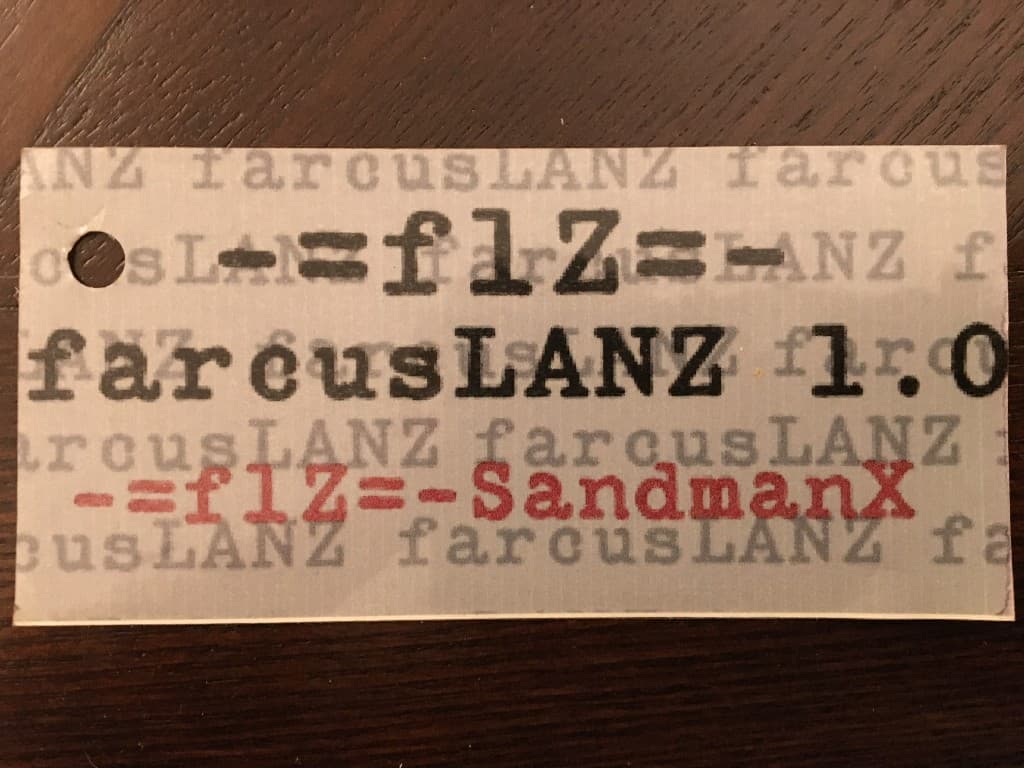
farcusLANZ / -=FLZ=-
The name started as an inside joke. Farkas came from an old movie. We called ourselves Farkas Lands, then shortened it to FLZ — Farkas Lands, three letters you could write on a badge or a whiteboard without thinking about branding. Steam was not in the picture yet. Neither was a logo package. We were friends who wanted to play the same games in the same room.
The public wordmark you see now is farcusLANZ, with the tag -=FLZ=-. Early laminated tags bent the casing; the abbreviation stayed the same. The store is simply the mark put on gear you can buy — not a rewrite of who we were in those rooms.
Dial-up made the room the network
Before the internet was put together the way people mean it now, the practical option at home was dial-up. If you wanted to play for real — clean matches, not a slideshow over a phone line — you had to be next to each other. That is the whole reason the dining-room and garage years existed. Drag the tower. Claim a span of table. Plug into a hub. Learn why the lights on that box mattered.
Learning how to use a network hub so we could game is how most of us got our start in IT. Not a class. Not a certification path. A pile of CAT5, a beige tower that would not join the match, and somebody figuring out IP addresses because Counter-Strike would not wait. Careers grew out of that habit later. At the time it was just how you got a game.
Dining rooms, then garages
It did not start in a fire hall. It started in friends' dining rooms — cables across the carpet, monitors on whatever furniture would hold them — and then, when the rooms got too small and the parents got too loud, in friends' garages. That was the real school: how many machines fit, who brought the hub, who remembered the spare VGA cable.
Neighbors did not always know what they were looking at. Confused cops would cut through alleyways on a weekend night and drive past a garage door rolled open on a bunch of teenagers deep in Counter-Strike 1.6 — case fans, cigarette glow from the driveway, nobody looking like a threat to anything except their own K/D. Getting there was half the story. A CRT in the bed of a pickup truck would catch a bump and lift like it wanted out. You prayed the foam held and kept driving.
That stretch is mostly 2001 to 2005. Broadband started showing up toward the end, but it did not invent the habit. Dial-up had already taught us the rule: if you wanted a clean game with people you trusted, you sat in the same air.
Finding GXL early
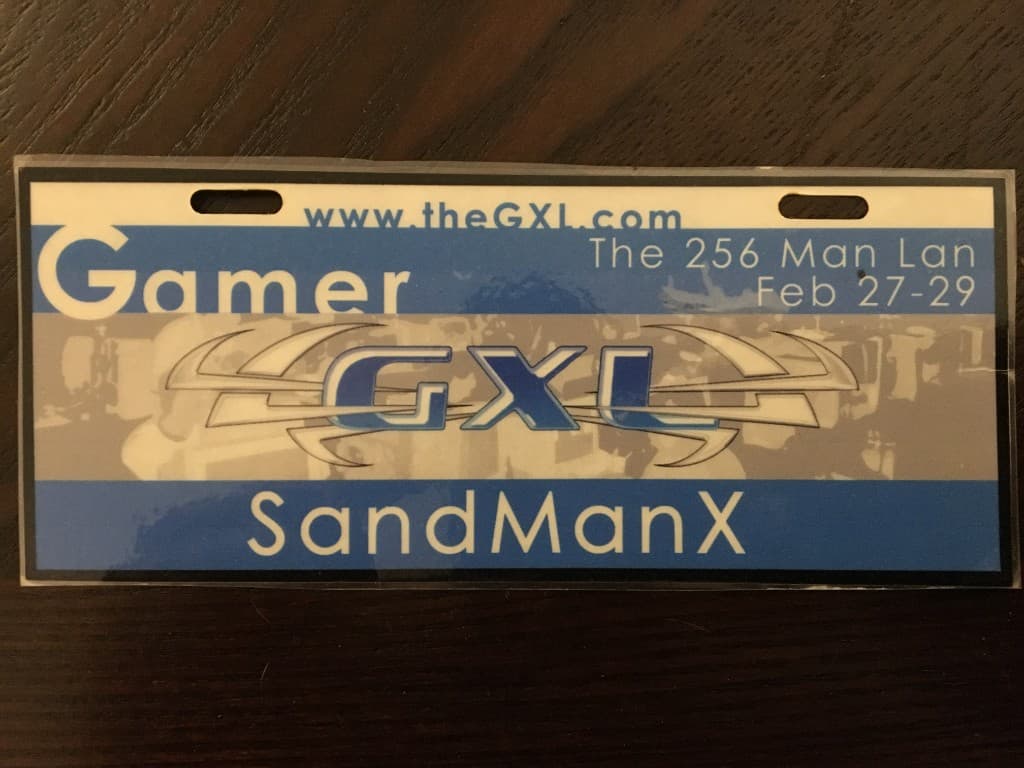
While the garage nights were still the weekly habit, we started hanging around the bigger South Jersey orbit — most of all GXL — and figuring out what a real host looked like. We were in that circle early, before a lot of the parties people later listed on websites, back when the scene still felt like word of mouth and a badge punched for a lanyard.
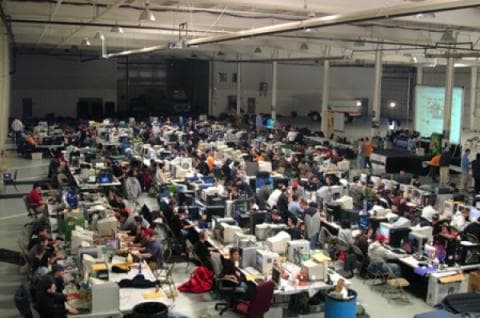
The one everyone still points at is the early 256-man GXL LAN. Longer walk from the parking lot. Rows of CRTs under warehouse lights. You still carried your own machine. You still knew the people in your row by the stickers on their case. Right at the start of the LAN, a D-Link switch went catastrophic — the kind of failure that can take a whole wing dark before the first match. It got saved. Barely. People who were there still remember the scramble more clearly than the brackets. And you remember the DC++ servers — they were everywhere. If a file was on the LAN, it was on a dozen hubs before the first match started.
That weekend also had a quiet lesson in how fast a room that size could move. The Postal developers were there showing their game. People were genuinely glad they came. The less flattering detail, told with a wince more than a boast: a copy was on those DC++ shares within minutes. Not the welcome any studio hopes for — and not something we dress up as a win. It is just what a hall full of open shares looked like in that era. The trip still matters to the FLZ story because it proved a dining-room crew could stand in a larger room without turning into a different kind of group — and because it taught us what we wanted to run ourselves.
Tuckahoe Fire Hall — our 50-man
Slowly, we got good enough at the logistics to host our own. The home base that stuck was Tuckahoe Fire Hall — South Jersey, not a convention center. An FLZ 50-man LAN: folding tables in rows, tape on the floor for cable runs, a chair that failed around 2 a.m. Someone always forgot a monitor cable. Someone always had a spare. Dust, pizza, warm PSUs. Case fans and whoever was losing.
Setup started in the afternoon. You claimed a span of table, prayed the switch had a free port, and spent the first hour arguing about which build of the game was the real one. Then the room settled. Matches ran until the last cars left. We did not keep official standings. We kept the list of who showed up and who would show up next time. Friends first, then whoever the friends vouched for — that is still why this page talks like a crew story even when the next click is the shop.
After the rooms
Broadband eventually did what everyone said it would. You did not need a fire hall to get a game. The weekends stopped feeling like a season. Nobody issued a press release. The folding tables went back in the closet.
The friends did not disappear. They still game — deskside, in lobbies, on whatever the current client is. Not as a scheduled circuit. Years later there is a Steam group FarcusLANs as a leftover public room for the same people. That is after the fact — not how the dining-room years worked.
That is the honest present tense. farcusLANZ is a living crew with a dead competitive calendar — and a store that puts the mark to work. If you came here for the history, stay on this page. If you came to buy, the shop is one click out.
What this site is
Home is the storefront. Right now that means low-level entry gear for beginner gamers — solid deskside kit without pretending it is tournament glass. The longer bet is fully customized FLZ gaming gear at the high end: our mark on builds worth saving for. We are not there yet. The shelf you see today is the start.
This about page is the crew story. Forms are how you reach us. Cart, checkout, and fulfillment live on Shopify — linked from every Shop control. Contact means write us about gear, an order, a night you remember, or a bug on the page. We read the notes. You get a short automatic acknowledgment that we received it — not a ticket number.